Burnham Overy Staithe, Norfolk
In March 2025 I made for one of the remotest stretches of the Norfolk coast, the wild dunes running between Burnham Overy Staithe and Holkham. Getting there was an adventure in itself: ninety minutes on foot from the car, along an embankment raised above the salt marshes, the last third giving way to soft, energy sapping dune walking, made harder still by trying to film the whole trek at the same time. By the time I arrived, dusk was already settling in.
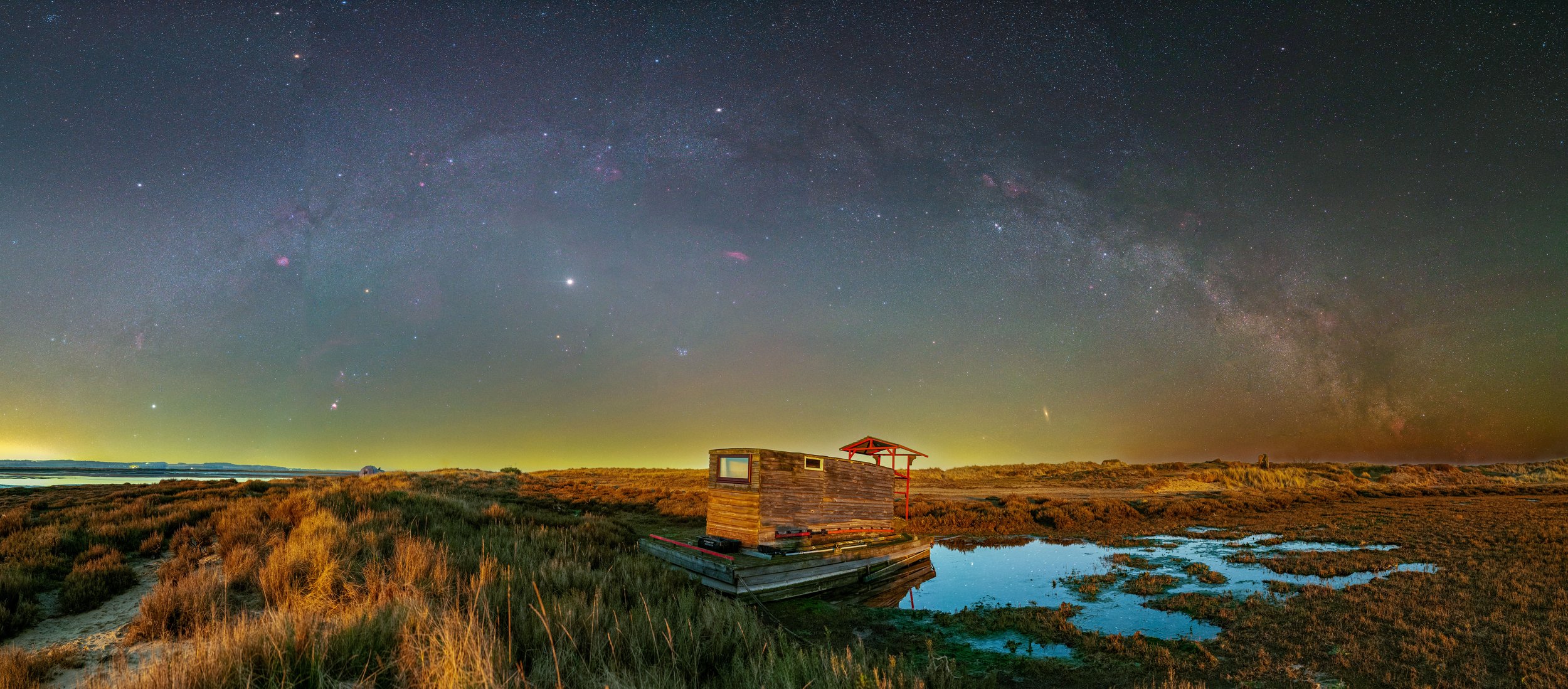
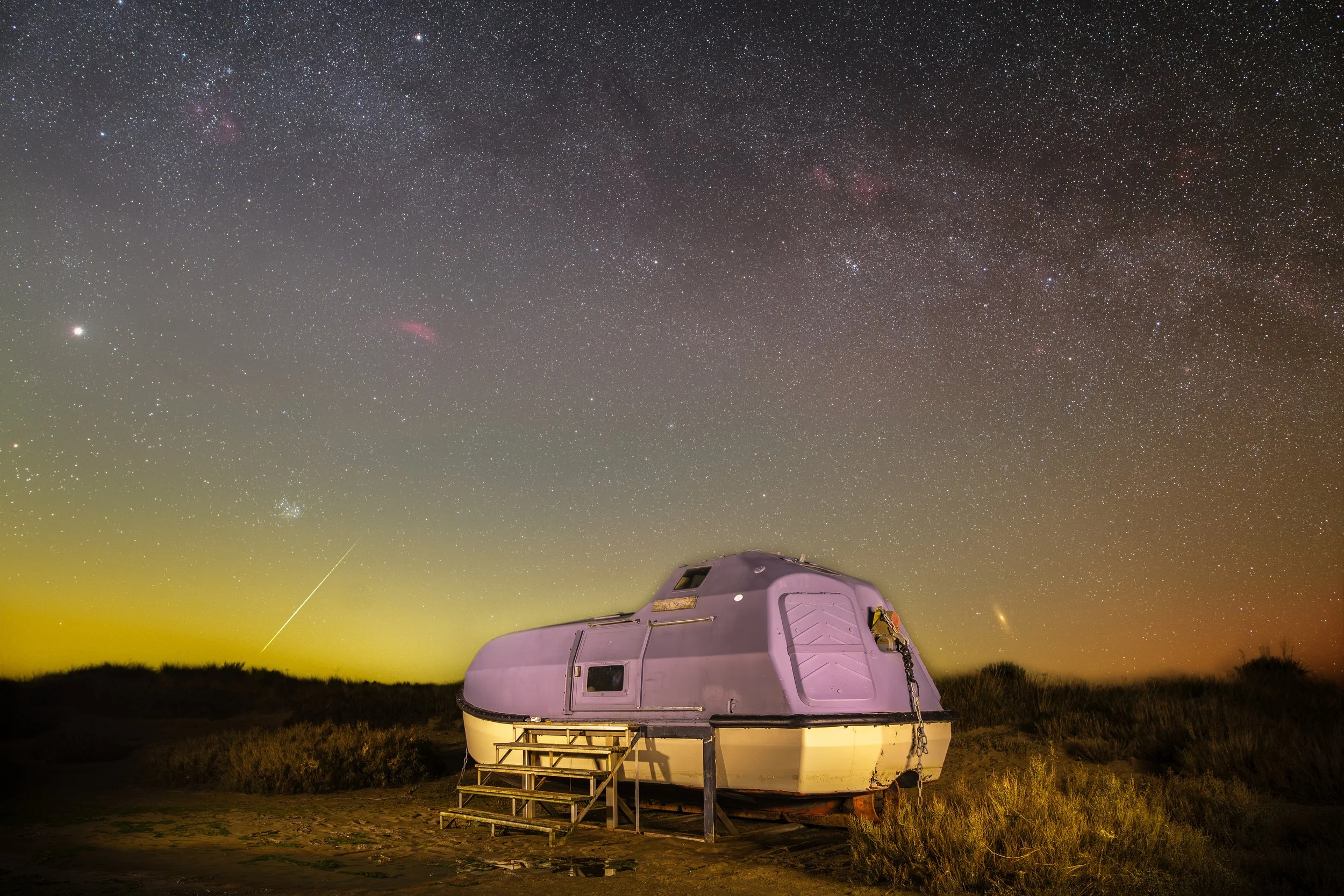
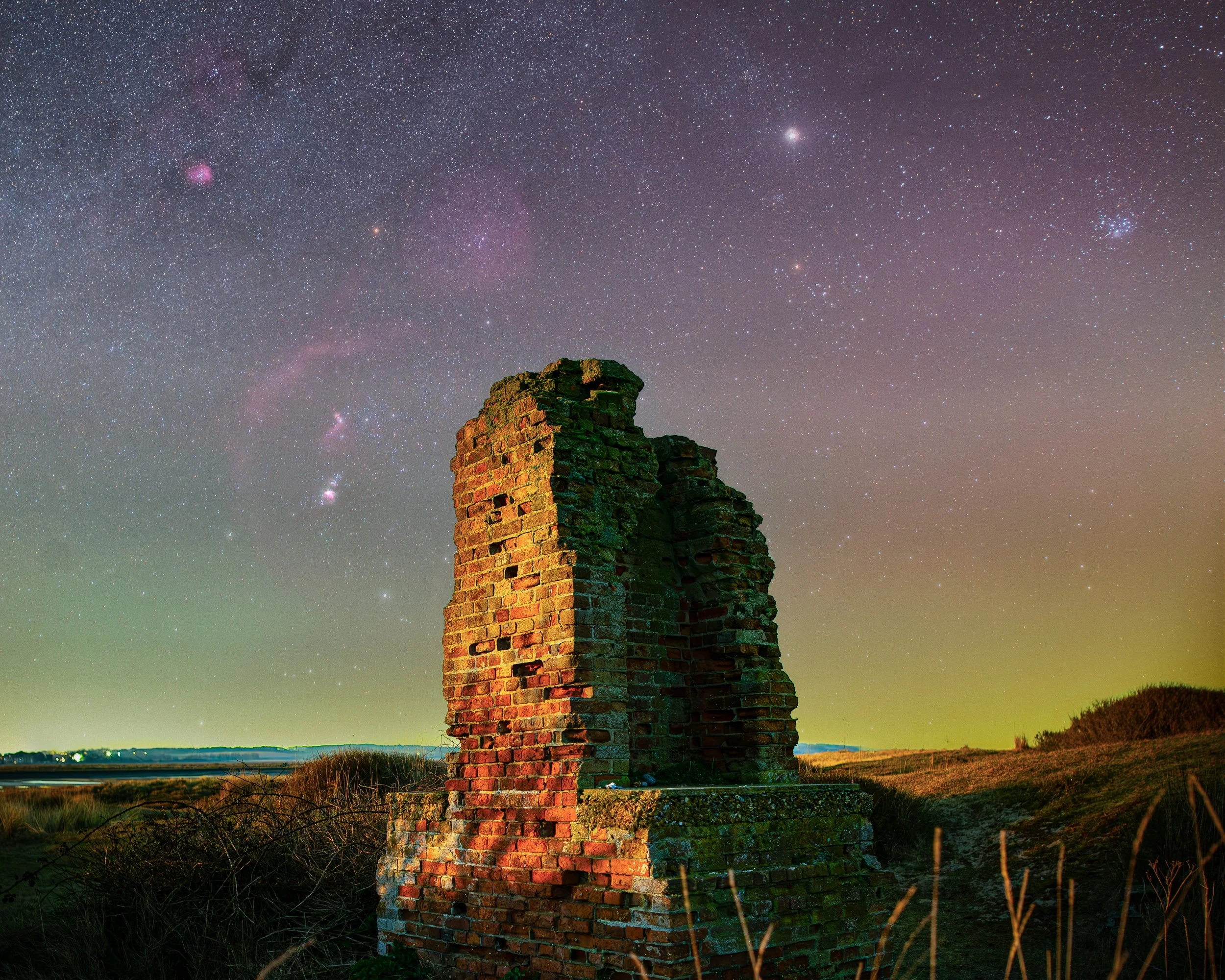
I’d chosen this stretch deliberately. The sky to the south west opens up over rural north Norfolk, dark and uninterrupted, and with the season’s last real chance at Orion in mind, I wanted somewhere that could do it justice. I’d scouted a couple of foregrounds beforehand from satellite imagery and whatever scraps of information I could dig up: a derelict brick chimney, the remains of an old smokehouse once used to cure the day’s catch before it went to market, and further along, the Grey Goose, a retired lifeboat given new life as a tiny holiday cabin, standing on stilts and tethered to the shore by chain, the kind of tether that suggests it’s floated free more than once on the highest tides. Wandering the dunes, I found a third subject I hadn’t planned for: another houseboat, far more careworn than the Grey Goose, more shed lashed to a barge than boat.
What stays with me most from that night, though, is the sound. Norfolk’s coast has a way of filling the dark with birdsong and calls from the marshes, a constant, layered soundtrack running underneath everything, and that night it built steadily as the hours passed. Somewhere around midnight, as a waning moon began to rise, the chatter grew noticeably louder, as if the marsh itself was responding to the change in light. Alone out there, camera set up, nothing but marsh birds and stars for company, it was one of those nights that reminds you why remote and dark are worth every step it takes to reach them.