Ceunant Mawr, Snowdonia
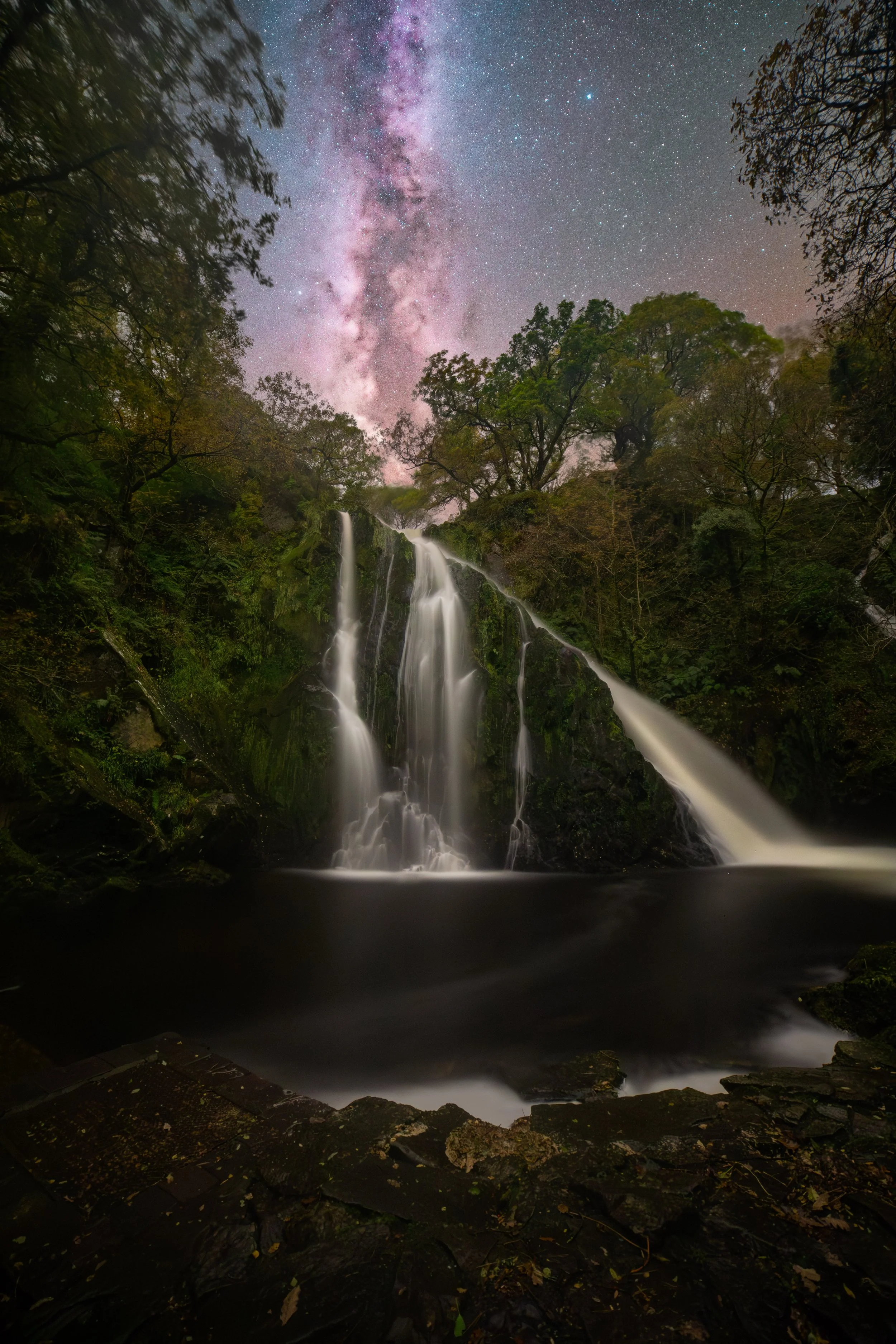
Above the village of Llanberis, tucked into a narrow, moss-choked ravine, Ceunant Mawr, “the waterfall of the great ravine”, plunges over a hundred feet in two distinct stages, each shoot angled almost perpendicular to the other, as if the water itself couldn’t decide which way to fall. It’s a spot known mostly by day, framed by the Snowdon Mountain Railway’s viaduct and visited by walkers chasing an easy waterfall fix. By night, in gale force winds, it becomes something altogether wilder.
On an October evening, Snowdonia was being battered. Gales tore across the high ground, the kind of wind that flattens grass and makes standing upright an effort. But down in the gorge, walled in by rock and hanging trees, the waterfall itself offered a strange kind of shelter, close enough to the roar of falling water that the wind above barely registered. It was my first time shooting in Wales, and Ceunant Mawr gave me an introduction that was equal parts brutal and wonderful. The falls threw spray in every direction, soaking through kit almost the moment I set up, and the noise was constant and enormous, a wall of white sound that swallowed everything else.
Above that chaos, in the gaps between racing cloud, the Great Rift revealed itself: that dark seam of dust that runs through the heart of the Milky Way, cutting a shadow through the galaxy’s brightest reaches. Framed above the thundering water, it felt like two forces caught in the same frame, one impossibly ancient and silent, the other close, loud, and utterly present.
The strangest moment came right at the end. As I packed up and started back down the path, the roar of the falls dropped away with startling speed, replaced almost instantly by the sound of the gale still raging along the top of the gorge, far overhead, untouched by the shelter I’d been standing in all night. Two storms, one below and one above, and I’d spent the night caught quietly between them.