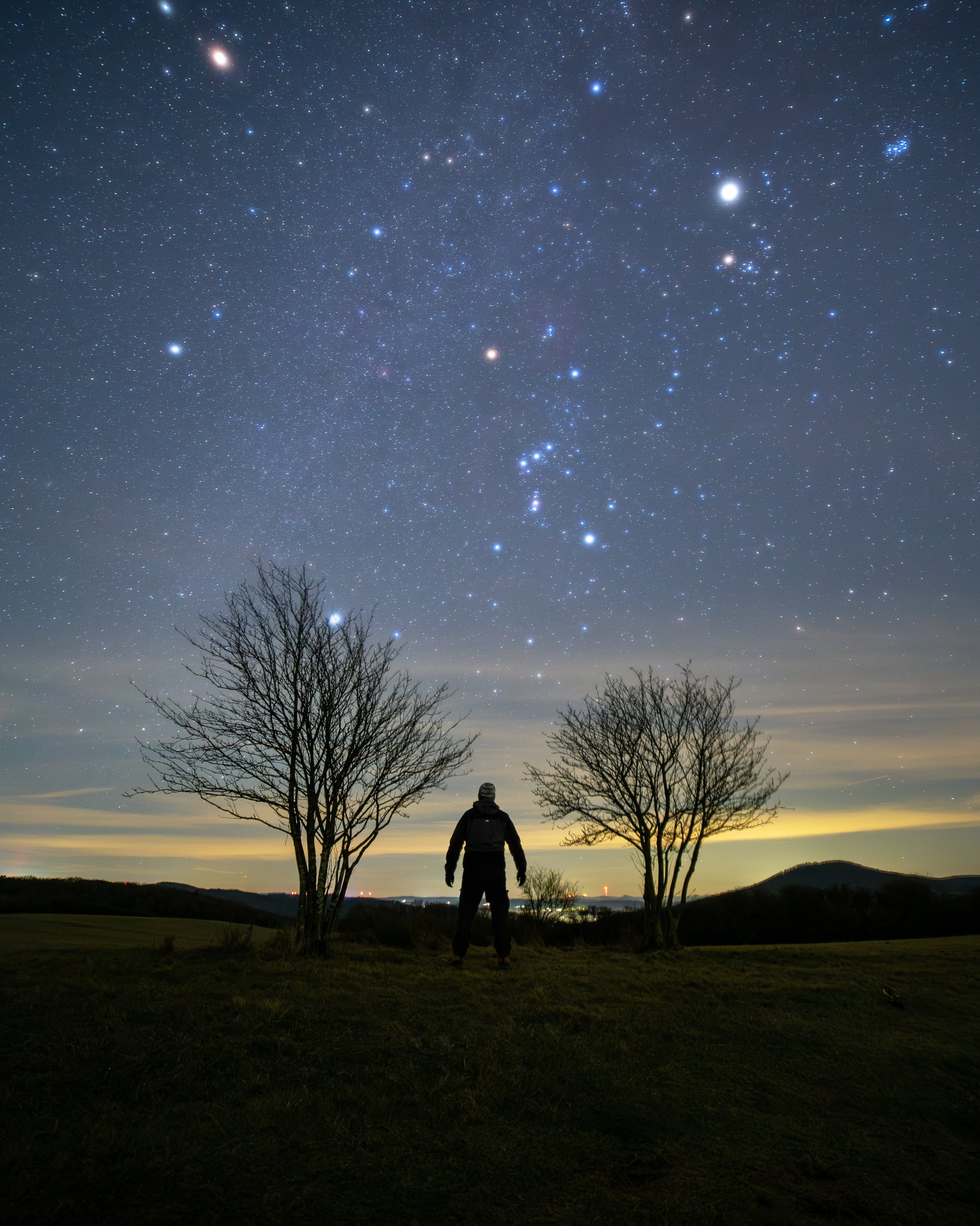
Eifel, Germany
At the end of January, straight off the back of my night at Dovercourt, I caught the ferry to the Netherlands to meet up with my friend and fellow astro-filmmaker Jeroen Linnenkamp, for a couple of nights shooting together. Dutch cloud cover, it turns out, has a habit of confounding even the best forecasts, so we made an early call to cross the border into Germany’s Eifel region instead: a stretch of rolling, ancient hills shaped by volcanic activity going back tens of millions of years, still dotted today with crater lakes and quiet forested valleys.
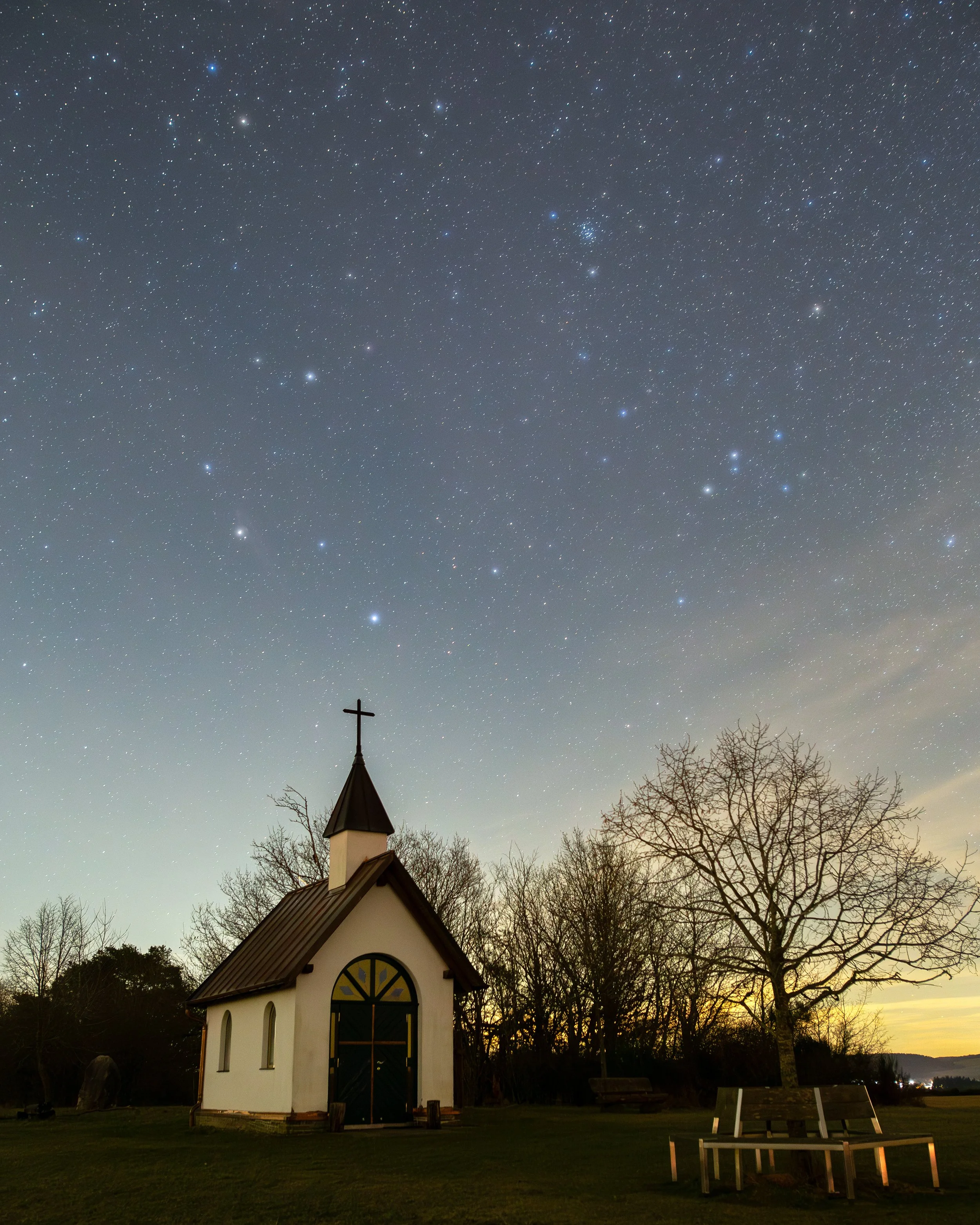
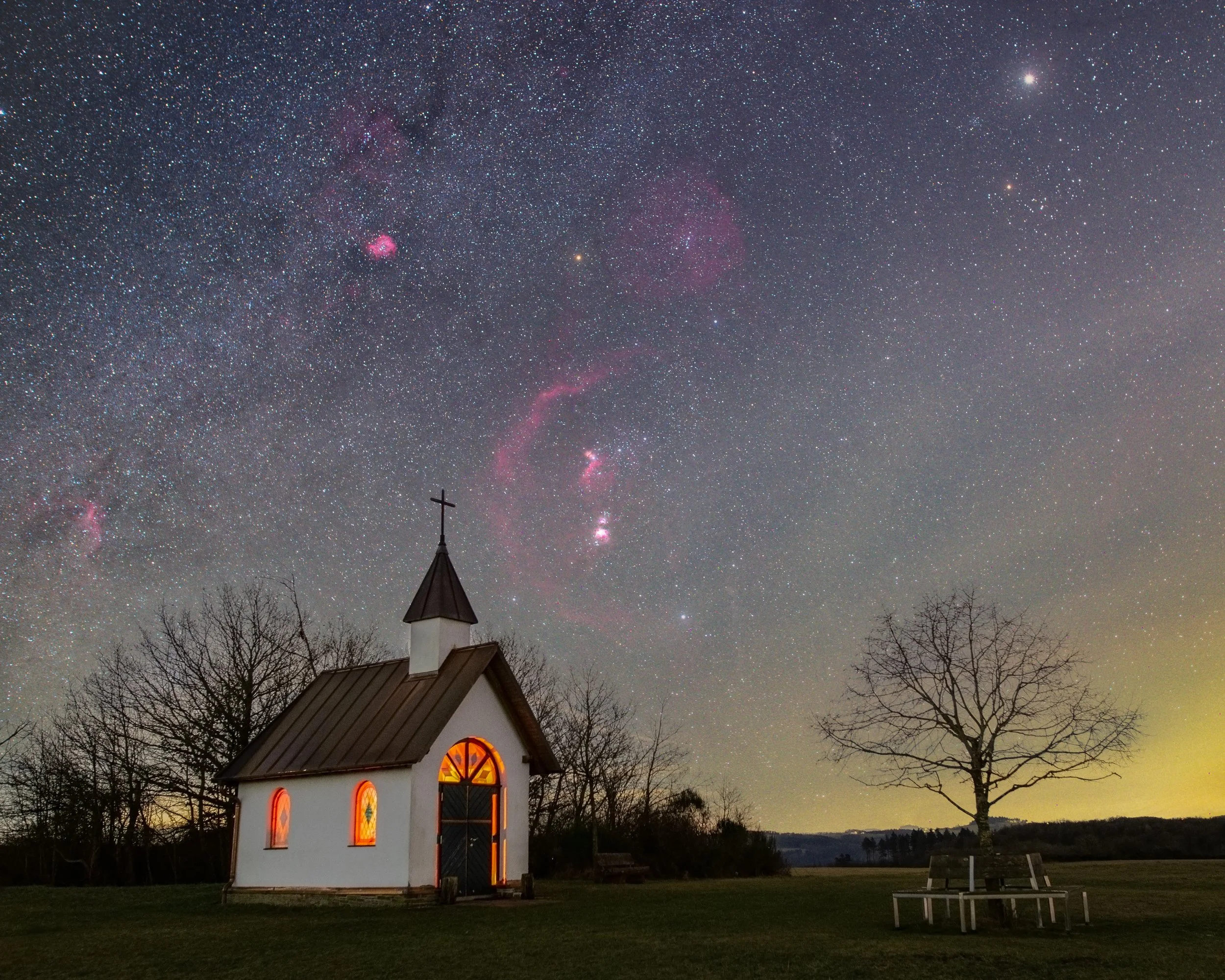
Our first stop was Kottenborner Kapelle, a tiny chapel perched on a hillside, the kind of understated, storybook foreground you dream about finding. Stubborn high cloud greeted us on arrival, and for a while it looked like it might be a long night of waiting. But a steak dinner around a campfire bought us enough patience, and the haze finally broke, handing us a sky that turned properly, wonderfully dark just as the temperature dropped to around minus six. We spent an hour or so working the chapel, lighting it gently from inside to bring out its shape against the stars, before moving on.
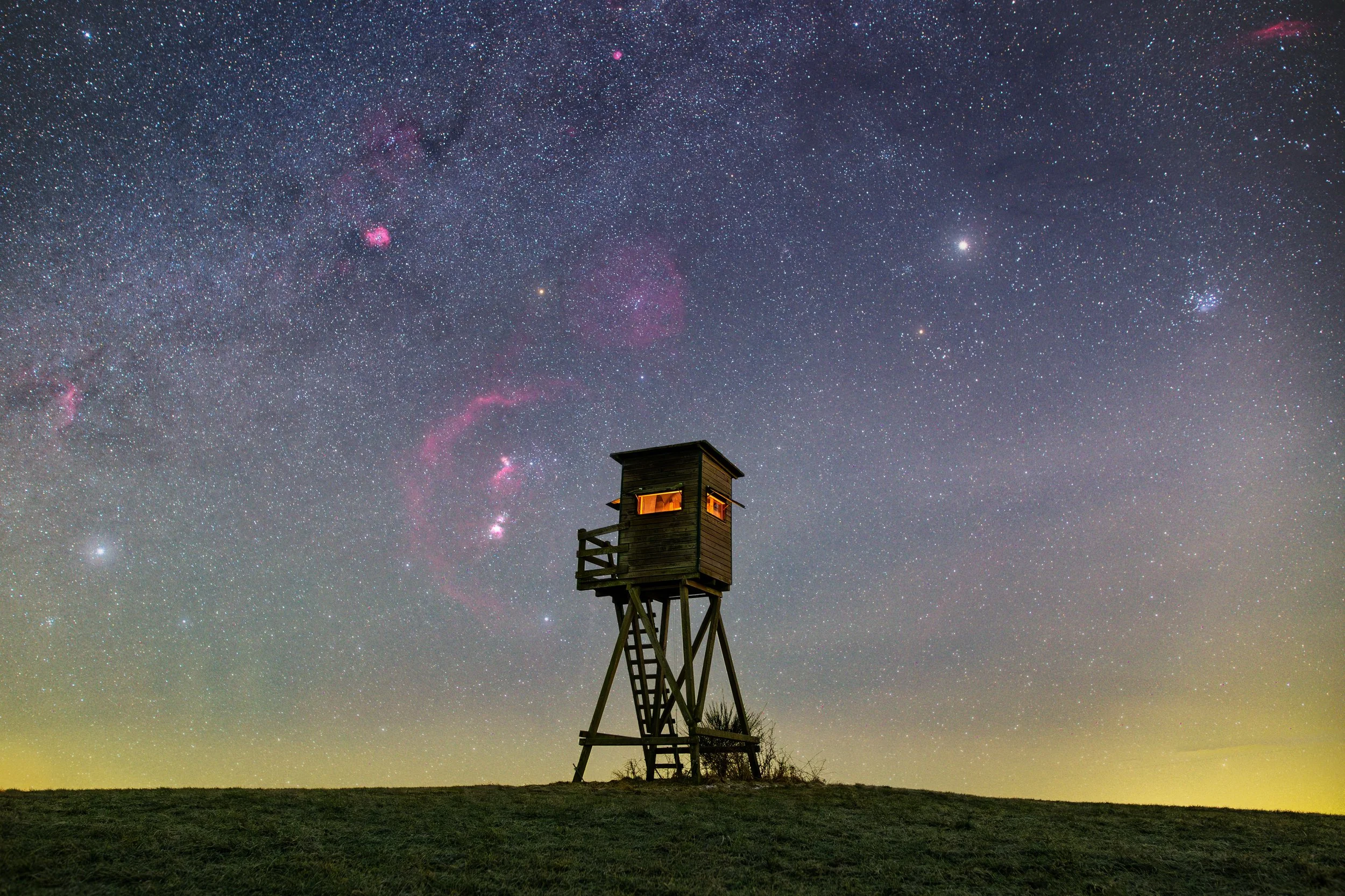
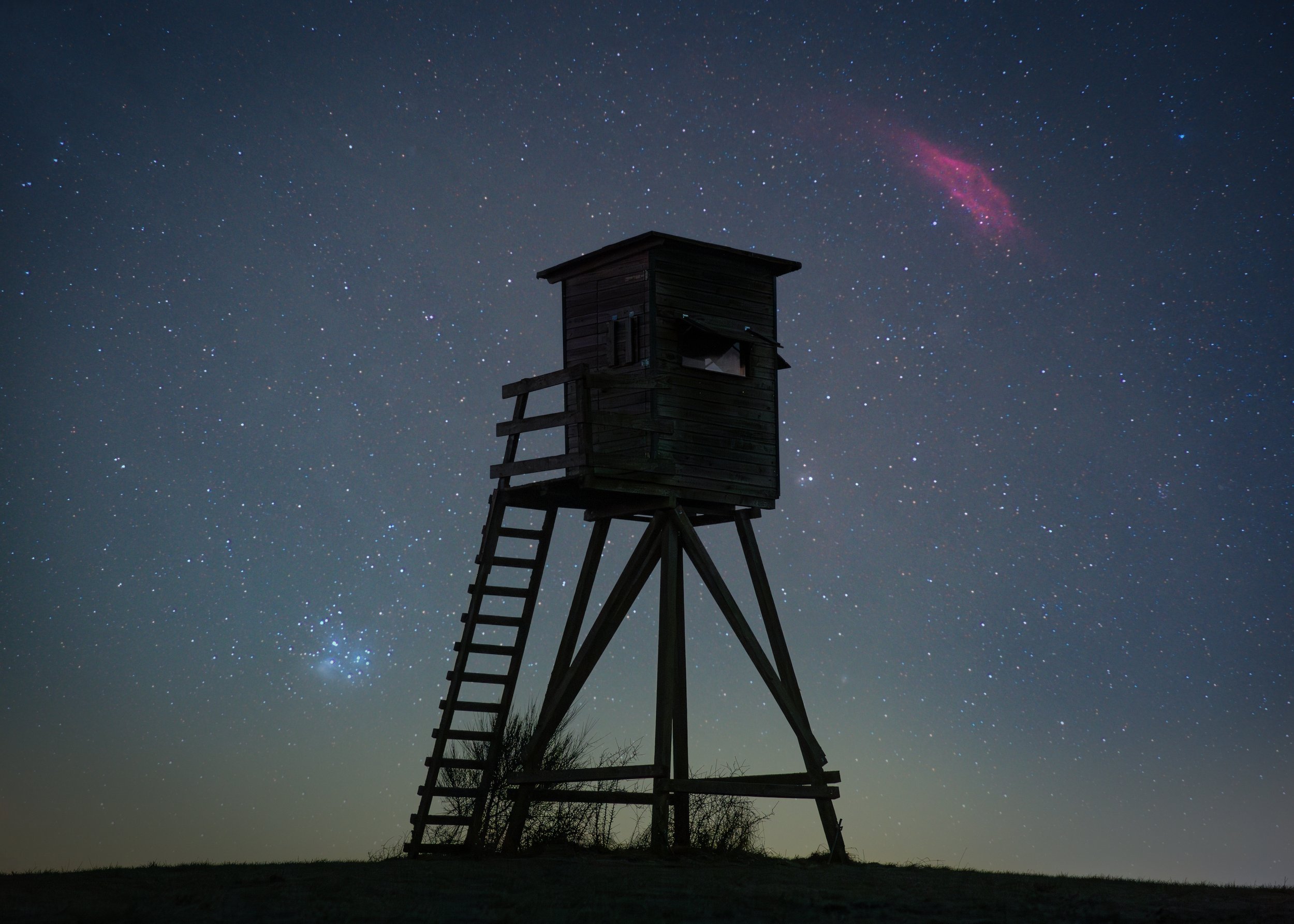
The second stop of the night, a hunters’ hut standing on an exposed ridge a few miles up the road, gave us compositions in almost every direction, clean horizons wherever we pointed a lens. That openness came at a cost though: with nothing to break the wind and the temperature falling further still, to around minus eight, it turned into a properly biting night. But there’s something about sharing that kind of cold with a friend, comparing notes on process, swapping ideas for shots, that makes it feel less like an ordeal and more like exactly where you’re meant to be. I ended the night asleep in the back of the Jeep, and woke to a properly beautiful reward: breakfast cooked in crisp winter sunlight, looking out over the forested hills that had kept us company all night.