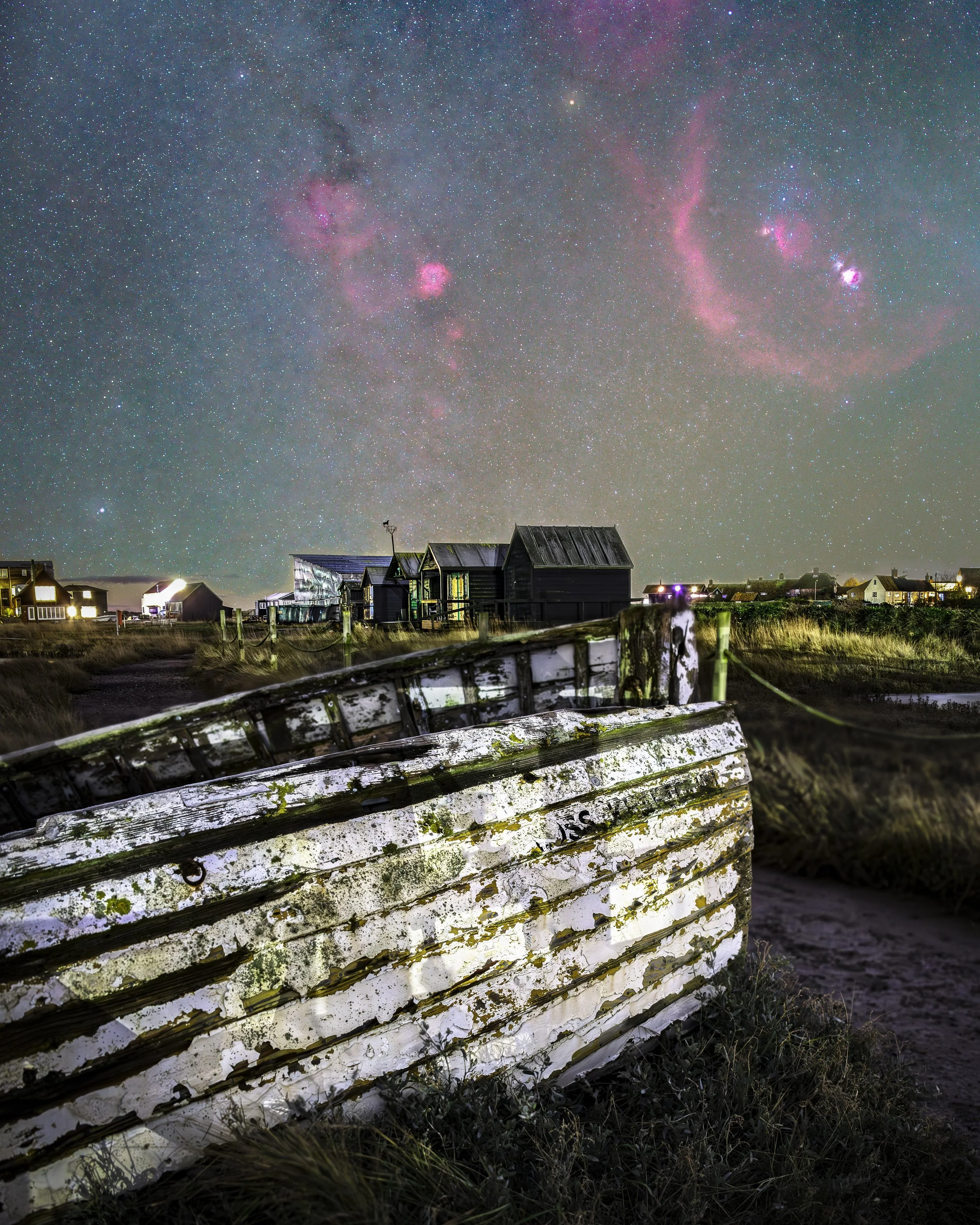
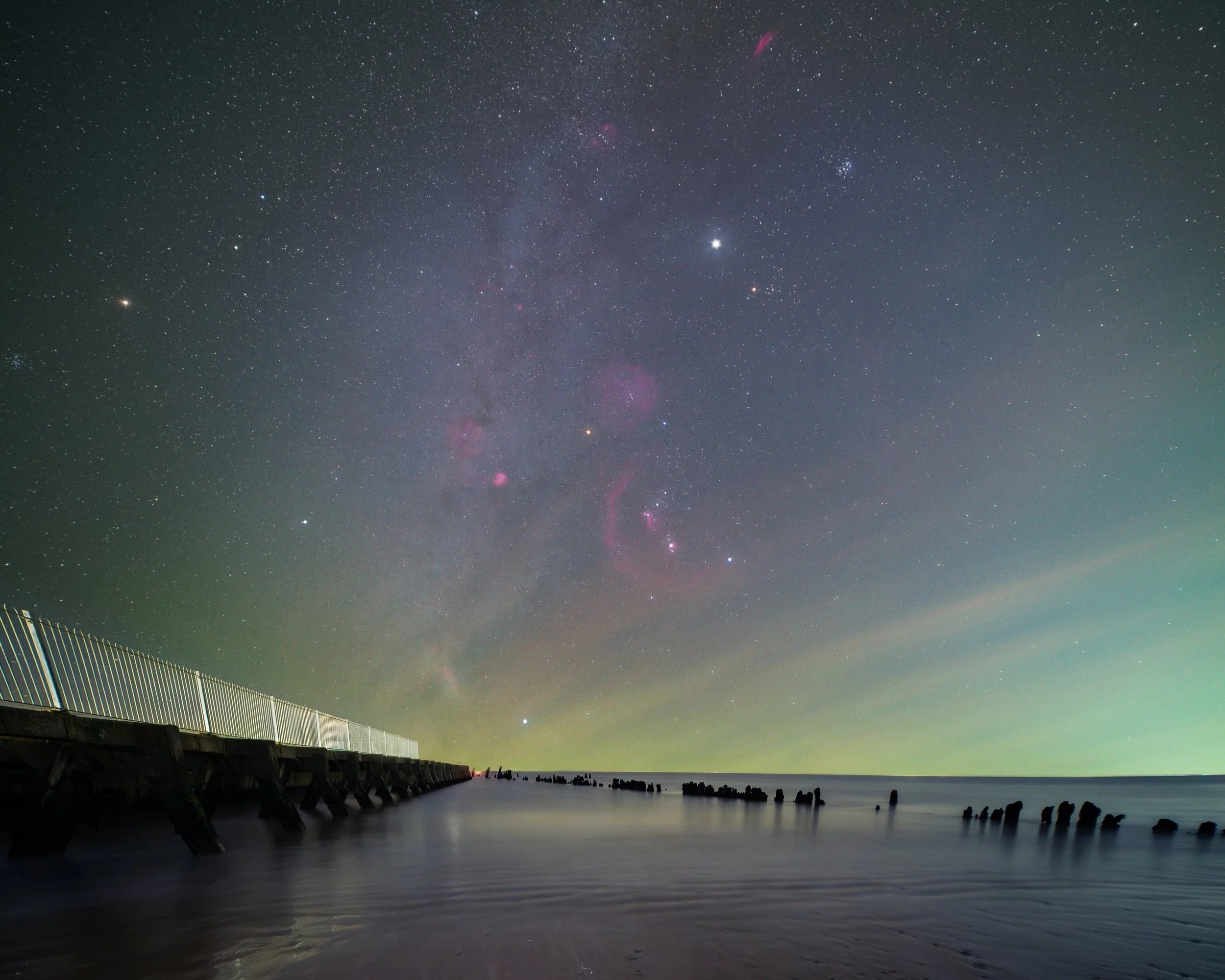
Walberswick, Suffolk
Early January 2025 took me back to the Suffolk coast, this time to Walberswick, the small village just south of Southwold that my wife and I used to visit on daytrips when we lived in London. It sits at the mouth of the River Blyth, backed by dunes and marsh, a place that’s stayed quietly unspoiled even as its more famous neighbour across the water has grown into a full-blown seaside town. I had compositions in mind along the dunes, down on the beach, and along the estuary bank, and after a Christmas and New Year almost entirely lost to cloud, I was desperate to get back under a proper dark sky by the sea.
The sky did its part. Stunningly clear, properly dark, everything I’d been waiting weeks for. The night, however, had other ideas. Early on I set up a timelapse on the beach, misjudging by some margin how far the tide would reach. When I came back a couple of hours later, my camera, a Canon 6D with my favourite lens, a Sigma Art 24mm, was gone, swept off by a sea that had crept far higher up the beach than I’d allowed for.
I felt pretty sick about it, and for a while the self-doubt crept in properly: who was I to be making videos about this stuff if I couldn’t even judge a tide line correctly? But there was nothing to be done, the camera was gone, presumably filming something strange and unintended on the seabed, and a four hour round trip under a clear sky was too precious to waste sulking. I talked myself back into the right frame of mind and kept working, though the knock clearly stayed with me. The compositions didn’t flow the way I’d hoped, and I came home with three shots I’m happy with, but with the nagging sense that a clearer head might have found more in a location that had plenty more to give.
The postscript almost makes up for it. The next morning, a friend sent a screenshot from a coastal photography Facebook group: my camera, still on its tripod, intervalometer and power bank still velcroed on, washed up and photographed by a stranger who’d stumbled across it. The camera and lens are write-offs, but the tripod cleaned up well, and the SD card survived, holding one last frame: the exact moment the sea took it.