

Aurora
Nothing compares to the ethereal beauty of the northern lights dancing overhead from the northernmost reaches of Europe. Chasing the aurora from within East Anglia and Arctic Norway has become something of an obsession for me.
One Arctic Night
I shot this collection of timelapses during the course of one stunning, moonlit night on the Norwegian Arctic island of Langøya in April 2023. The aurora was so bright that it easily shone through the bright moonlight, which bathed the stunning, snow-topped landscape in silvery light. That night I shot over 8,000 images; the best 5,000 made it into this film.

Beaming (Click for story)

The Many Colours of Heaven (click for story)
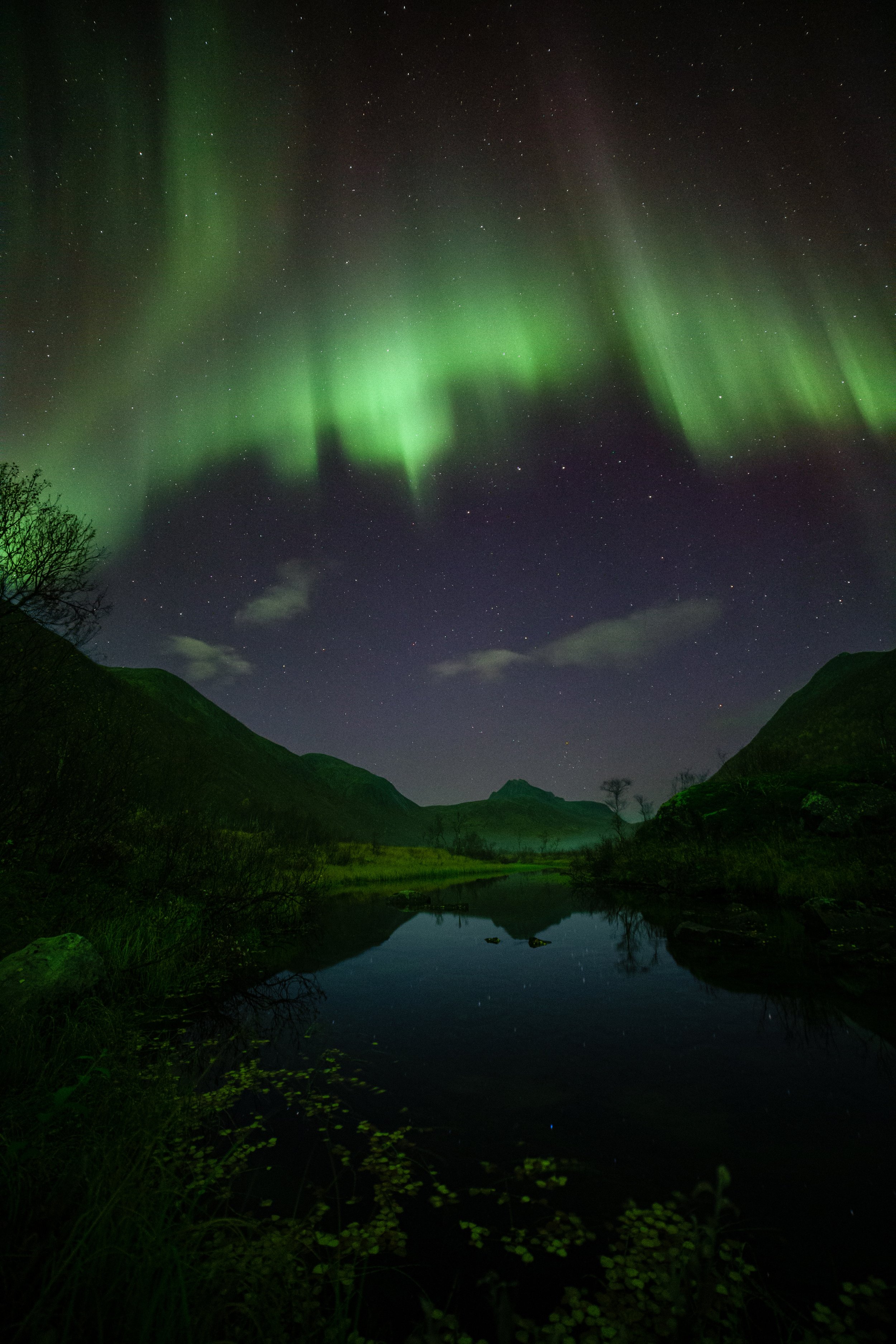
Light and Tranquility. (click for story)

Frohode Fantasi.

Aurora at the Array (Click for story)

Ethereal.

Streams of Light. (click for story)

The Beauty of her Dance. (click for story)

Dreaming in Senja. (click for story)

Sea of Light.

The High Road. (click for story)

The Night the Sky Came Alive (Click for Story)

Northern Lights above Over Windmill

Aurora at the One Mile
Noctilucent Clouds
Noctilucent clouds are the highest clouds in our atmosphere, forming around 80 kilometres up in the mesosphere, far above anything we’d normally call weather. They’re made of tiny ice crystals that form on specks of meteoric dust, and they only become visible when the sun has dropped just below the horizon, typically between six and sixteen degrees down. At that point, while the ground below is in twilight, these fragile ice clouds are still catching direct sunlight from their lofty vantage point, and they glow with an electric, silvery blue that looks like nothing else in nature. Seen against a darkening sky, they can appear almost woven, with delicate wisps and ripples that shift slowly as you watch.
Because of the geometry involved, noctilucent clouds are a phenomenon of high latitudes and of summer. They need a sun angle that only occurs during the weeks either side of the summer solstice, and are best seen from around 50 to 65 degrees north (or the equivalent southern latitudes in their own summer). This is why anyone chasing them from the UK, Scandinavia, or similar latitudes is working within a narrow seasonal window, usually late May through to early August in the northern hemisphere.
There’s a quiet irony for anyone who loves the night sky in these regions. The very same weeks that make noctilucent clouds possible are the weeks when true darkness is hardest to come by, since at high latitudes in summer the sun barely dips far enough below the horizon for the sky to reach proper astronomical darkness. The Milky Way, needing a truly dark sky to show its full contrast and detail, is often at its faintest right when these ghostly clouds are at their most likely. So the noctilucent season becomes its own reward: a chance to trade one wonder for another, standing under a sky that never fully surrenders to night, watching electric blue filaments drift across the last light of a sun that’s already set.
I’ve been fortunate enough to see noctilucent clouds from a variety of locations. The most memorable for me was the display that broke out while Comet NEOWISE was at its brightest in July 2020. Watching the comet low and bright in the northern sky, it gradually became accompanied by a vivid display of shimmering NLCs - a comet lingering amidst a ghostly reflective luminescence of comet dust.